Balancing Kapha, Vata and Pitta Doshas: Understanding Their Dynamic Interactions

water-droplets-on-grass_w725_h544

The cool, moist spring weather heralds the arrival of Kapha season. The qualities of Kapha dosha are cold, heavy, oily and smooth. These qualities tend to dominate in the environment and in the physiology from late February to the end of May.

The role of Kapha dosha is to maintain structural integrity—to resist any environmental influence from breaking down the physiology. This is why individuals who are Kapha-types have more highly developed physical structures (such as the musculature system) When Kapha becomes aggravated, however, the qualities of heaviness and dullness increase the Kapha’s protective value becomes obscured.

Interactions of the Doshas

We should keep in mind that every point of the physiology involves the interaction between Vata, Pitta and Kapha. So when we discuss an imbalance in one dosha, there will always be interactions with the other doshas. This point is especially true with Kapah dosha, the most physically inert of the three. Usually its stability becomes disturbed through a dynamic interaction with Vata or Pitta.

Kapha Follows the Leader

Because Kapha represents the material value of the physiology, it is less likely to become disturbed than Vata or Pitta. And because it is more material and slow and steady, Kapha tends to stay stable in its own location. Therefore, it is much more difficult to move Kapha out of its proper place.

This is why the original text of Ayurveda, Charaka Samhita, indicated that there are twice as many disorders and diseases caused by Vata as Pitta and twice as many disorders and diseases caused by Pitta as Kapha. This is also the reason why Kapha disorders are most commonly found associated with disturbances of Vata and Pitta. Usually, Vata is the first dosha disturbed, since it is most delicate and quick in its nature. And in its dynamic interaction with the other doshas, it can lead Pitta and Kapha to get disturbed as well.

Treatment of Kapha Imbalances

If a person has a condition involving all three doshas, an Ayurvedic expert can take into account all the imbalances and try to treat them simultaneously. At the same time, the expert can often try to treat the most fundamental, causal level first, and usually—even with a Kapha disorder—that will be Vata. As the Vata imbalance is corrected, the Pitta and Kapha often get corrected simultaneously because of the dynamic interplay between the three streams of intelligence.

One of the best things you can do for your body during the spring season is to undergo traditional Ayurveda purification, detoxification and rejuvenation treatments, called Panchakarma. These treatments are designed to balance all three doshas and rid the body of accumulated impurities, including excess Kapha dosha, resulting in a fresh, settled, balance mind and body.

For more information on Panchakarma treatments, visit The Raj Ayurveda Health Spa website:

www.theraj.com

Stimulating Tips for Kapha Season

As the weather changes from winter (Vata season) to spring (Kapha season) you may notice changes in your mind and body. During the wet and cool Kapha season, which lasts from March to June, you may feel the onset of spring fever or the need to take more exercise—and you also may be more likely to catch a cold or flu.

Lifestyle Tips

Here are some lifestyle tips to help you stay balanced, warm and dry during spring:

Eat hot food—hot in temperature and in spices as well.

Drink hot, stimulating drinks, such as teas with ginger.

bowl-336538_640

Cut down on refined sugars. Substitute raw, unheated honey instead. Honey is the only sweetener that is also astringent and has the ability to reduce Kapha. Be sure not to heat your honey and only add it to hot drinks when they are at “sipping temperature”.

Favor foods that with the following tastes: astringent (such as beans), spicy (chili peppers or curry powder, for example) and bitter (bitter greens and spinach). While you may find yourself tempted to start eatting more salads, be careful about avoiding cold foods.

Early to bed, early to rise. As Kapha season progresses, the sun rises earlier and earlier. If we are constantly waking up after the sun rises, we will feel sluggish and tired. This habit can result in the build-up of impurities (ama) which predisposes us to allergies and congestion.

Try to exercise in every morning. Getting some good, brisk exercise during the Kapha time of the morning (6:00 – 10:00) will help you maintain a healthy balance during this wet and cold season. Just as sleep is the number one took in balancing Vata, and diet the number one tool in balancing Pitta, exercise is the number one tool for balancing Kapha.

Get the Most from Your Food

Digestion tends to be sluggish during Kapha season. Here are some ways to help you perk up your digestive fires:

Try eating a ginger pickle before lunch or dinner. To make a ginger pickle, slice a thin piece of fresh ginger root (peeled). Sprinkle the slice with lemon juice and salt and eat it about 15 minutes before a meal.

Be sure to remain seated for 5 to 10 minutes after you finish eating in order to give your digestion a chance start processing the meal.

Sore Throat Relief

If you feel a sore throat coming on, try taking 3/4 teaspoon of raw honey mixed with 1/4 teaspoon of turmeric. The astringent tastes of turmeric and honey help to dry up congestion and prevent a sore throat. Of course, if the symptoms last more than two days, be sure to see your doctor.

This is also the perfect time to check in with an Ayurveda expert or to schedule Ayurvedic detoxification and purification treatments (Panchakarma). For more information, visit The Raj Ayurveda Health Spa web site:

www.theraj.com

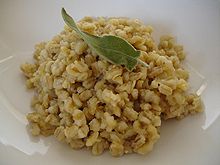
Barley: The Ultimate Kapha-Reducing Grain

220px-Lemon_Barley_Pilaf

Barley is an ancient grain first cultivated in the Fertile Crescant area of West Asia and in Tibet. Not only is barley the best grain for balancing Kapha dosha, it is also beneficial for Pitta-types as well.

Mildly astringent, barley has a slightly drying effect, is diuretic in nature (helping to clear fluids from the body) and can help improve sluggish digestion. Ayurveda recommends organic, raw barley as opposed to pearl barley. Barley is considered one of the “good” carbohydrates because it is high in soluble fiber content and is slow to digest, thus reducing spikes in blood sugar levels after a meal.

As with many high fiber foods, barley helps to increase the release of bile from the liver and gall bladder, aiding fat metabolism. High fiber foods also tend to appease the appetite longer, eliminating the urge to snack after a meal.

Barley helps soothes irritated, inflamed bowels and its fiber has been shown to repair the intestinal lining. Barley (along with whole-grain wheat, and rye) contains alkylresorcinols, a phytochemical that is an active antioxidant. Research suggests these grains have a protective effect against diabetes and ischeaemic stroke, as well as having anti-carcinogenic effects. There are also indicators that these grains work as natural regulators of excessive fat accumulation.

Barley water is effective in balancing weight and supporting healthy kidney functioning. Below the barley soup recipe you’ll find a recipe for barley water. With the advent of spring, those with Kapha imbalances and those who have gained weight over the winter may want to reduce their intake of rice and wheat and start including more barley in their diet.

Hearty Barely Soup

1/4 cup each minded fresh parsley

1/4 teaspoon rosemary

1/2 teaspoon basil

1/2 teaspoon oregano

1/2 teaspoon thyme

1 celery stalk, diced

1 carrot, diced or grated

1 tablespoon ghee (clarified butter)

5 cups vegetable stock or water

1/4 cup barley

1 turnip, cut into small pieces

1 bay leaf

salt and pepper to taste

Saute the parsley, rosemary, basil, oregano, thyme, celery and carrot in the ghee slowly for 10 minutes. Add the vegetables to the stock. Add the barley, turnip and bay leaf. Bring to a boil. Cover and reduce heat. Simmer for 1 and 1/2 to 2 hours. Season to taste with salt and pepper. This recipe makes about 6 cups of soup.

Barley Water Take 14 parts water and 1 part barley. Boil for 1 and 1/2 hours. Strain out the barley and pour the liquid into a thermos. Sip throughout the day. You’ll want to make this fresh daily

Spring is a good time to schedule a consultation with an Ayurvedic expert to help determine your state of balance and imbalance, and to see if ama has accumulated in your physiology over the winter months. For more information on Ayurvedic consultations, visit The Raj Ayurveda Health Spa:

www.theraj.com

Spring Ayurveda Health Tips

daisies-388946_640

Ayurveda cautions us to be especially alert during seasonal transitions because the body functions differently in each season. This is especially true in the transition from winter to spring—from Vata season to Kapha season. Late winter marks the transition time from Vata to Kapha. The frigid temperatures of January and February are behind us, the days are lengthening, giving more time for the sun to warm the earth, and nature is beginning to wake up.

As the temperatures rise, melting snow and ice, our environment and our physiology shift into a different mode of functioning. Moving from “hibernation mode” during which our bodies tend to store fat and crave heavier, Vata-pacifying foods, the body now begins to melt accumulated fat. If we have accumulated ama during the earlier months of winter, these toxins start getting released into the body’s micro-channels. This flood of toxins can compromise our immunity, opening the door to colds and flues. This excess of ama can also create joint problems and lead to sinus problems, asthma, bronchial infections, allergies and hay fever.

In addition to the build-up of ama, as the cold, wet qualities of Kapha increase in our environment, they also increase in our body. Kapha is what our body is made out of — our bodily fluids and our muscles, fat and bone. The main seat of Kapha is located in the chest, but we also find Kapha in the throat, sinuses, nose, stomach, joints, plasma, and also in secretions of the body, like mucus. Mucus has its function in protecting important tissue in the body. But an excess of mucus can lead to colds and other disorders. Because childhood is the Kapha time of life, during this season children may be especially vulnerable to producing excess mucus and experiencing upper respiratory illnesses. You can see why spring in a traditional time for cleansing and detoxing. The body is already in a natural detox mode and often needs our support.

Tips for Kapha Season  Diet:

Generally try to favor Kapha-pacifying foods such as bitter greens, beans and dals, and fruits such as apples, pomegranates. Continue to eat warm foods, but opt for lighter foods such as soups. Switch to grains such as barely, quinoa, couscous and millet. Avoid cold drinks and food, processed foods, fried foods, and heavy foods such as red meat and dairy.

Spices:

Adding pungent spices to your food will help increase your agni, or digestive fire, and help eliminate mucus and phlegm. Enjoy black pepper, cayenne, cinnamon, clove, and ginger. Try drinking ginger tea to help enliven your digestive fires. Also a glass of lukewarm water with ½ tsp of unheated honey first thing in the morning is a good combination. It not only helps warm the body but also digests all the toxins.

Exercise: One of the best ways to balance Kapha is to get exercise. Breaking a sweat by going for a brisk walk, run, or even using Swedna, or steam bath, can help relieve congestion and increase circulation. It’s important to choose the right exercise for your body type. If you have not been exercising regularly throughout the winter, start gently so as not to strain the physiology. Brisk daily walks and yoga postures are good for Vata types. More vigorous daily exercise is helpful for Kapha. Working up a sweat is during Kapha season, because it helps to boost agni, increase circulation and relieve congestion.

Sleep: Ideally, try to be in bed by 10:00 p.m so that you can wake up around 6:00 a.m. Try not to sleep into Kapha time (6:00 a.m. – 10:00 p,m.)

Oil Massage: Start the morning with an oil-massage followed by a warm bath. This will help to open the pores, and regulate your body’s internal thermostat. This is helpful in both Vata and Kapha season.

Panchakarma: This is also a great time for Panchakarma — the traditional purification treatments of Ayurveda. Panchakarma includes a full program of Ayurvedic massage, steam and heat treatments, and intestinal cleansing treatments, to rid your body of ama accumulated during the previous season. Panchakarma also helps to strengthen your agni, or digestive fire, in order to help prevent a build-up of ama in the future.

For more information on Panchakarma or consultations with an Ayurveda expert, visit The Raj Ayurveda Health Spa

web site: www.theraj.com

Ayurveda Exercise Recommendations for Winter and Spring

Elderly_exercise

These days there is no disputing the fact that exercise plays an important role in supporting both our physical and mental health. Exercise increases circulation and helps remove toxins and impurities (called “ama”) that have accumulated in the physiology. These deposits are a major factor in the breakdown of the resistance of the body.

Exercise is a key procedure for helping the body’s natural internal cleansing process. Exercise also helps increase mind-body coordination. According to Ayurveda, disease and disorders occur when the body loses contact with the underlying intelligence responsible for its maintenance and repair. Exercise involves the coordinated activity of body and mind and is a valuable aid in maintaining and enlivening the connection between the physiology and its underlying biological intelligence.

Ayurveda recommends exercising to 50% of capacity. Fifty percent capacity can be recognized when strain begins to appear in the body. You can tell if you are straining when breathing through the nose is no longer easy,  when sweat begins to appear on the forehead or nose, and when it becomes difficult to maintain proper form and focus during exercise.

Exercise should energize the physiology, leaving it feeling exhilarated and ready for work. Exercise should never exhaust the physiology, requiring extra rest for it to repair itself. When you reach a point of strain, don’t try to “push through”. Your body is letting you know that it is time to stop. Over-exercising turns on the body’s “fight or flight” systems, depleting the body’s reserves—exactly the opposite of the goal of exercise.

This caution is especially important for Vata types and for most body types during the Vata time of the year. Vata types have the quality of motion and changeability highly enlivened in their physiology. They need less exercise than the other major body types. They generally have more slender frames and less strong joints, and cannot take the pounding of heavy, extended exercise.

Exercising excessively during the cold, dry, windy days of Vata season will increase Vata in all body types. This can make one more susceptible to colds and flues. On the other hand, the harsh, cold temperatures of winter can discourage exercise and lead to months of sedentary habits. A complete lack of exercise—often accompanies by poor eating habits—can lead to an accumulation of toxins and to weight gain. While this may provide a feeling of comfort during winter, the price is paid in the spring when the release of built-up of toxins in the body can lead to allergies, spring colds, and asthma.

Committing to a regular, moderate and blissful exercise routine in the winter will help maintain balanced health throughout both the winter and spring seasons. Once the wet, Kapha days of spring arrive, you can begin to increase your exercise routine, especially if you are Kapha by nature. Kapha types have an inherent tendency toward heaviness, and as a result need significant quantities of exercise. Because Kapha types have strong frames and joints, they can more easily withstand vigorous and extended exercise.

The transition of winter to spring is a good time to check in with an Ayurveda expert to see how your body has maintained balance over the winter. If there is an accumulation of toxins, this is the time to take measures to adjust your diet and purify the physiology in order to avoid spring allergies and other disorders. For more information, visit The Raj Ayurveda Health Spa web site: www.theraj.com

Ayurveda: Bringing Healthy Babies into a Modern World

baby-499976_640

Today I’m going to look at two crucial ways that Ayurveda can help to bring healthy children into the world. One involves improving fertility; the other involves promoting the healthy brain health of fetuses and babies.

Falling sperm count is a serious modern problem. Back in the 1990s, Danish researchers reported “a genuine decline in semen quality over the past 50 years”, with possible implications for male fertility.

Numerous studies have linked this phenomenon to BPA, a chemical found in many plastics used to make food containers, bottles and coatings in tin cans. It is also commonly used in thermal paper in cash register receipts. Researchers claim BPA can disrupt hormones, raising the risk of a wide number of health problems such as diabetes, obesity and cancer — and disrupted sperm production. A recent Washington State University study indicated that the chemical “disrupts the delicate DNA interactions needed to create sperm.” BPA also has the potential to harm infants and the fetus. The chemical has already been banned in baby bottles in Europe because of safety fears.

The second and equally disturbing concern is the high “body burden” of toxins carried by women of childbearing age: toxins that can harm the brain development of fetuses and babies.

While the commitment to organic food and natural materials is steadily increasing around the world, we are still faced with the legacy of industrialization: a level of toxic exposure that has serious implications for future generations. Studies have focused on the three pollutants (lead, mercury and PCBs) because they are especially pervasive and persistent in the environment. Scientists identified specific risk factors to fetal and infant brain development for children of women with higher blood levels of these chemicals.

And studies show that as women grow older, the blood levels of chemical toxins increase exponentially. Women aged 30 – 39 had a 12 times greater risk and women aged 40 to 49 had a risk 30 times great than women aged 16 – 19.

The reason that risk increases with age is because the toxins accumulate in body over time. PCBs and BPA are fat-soluble chemicals. They bind to the fatty lipid layer that surrounds every cell in the body. This is where the ancient detoxification treatments of Ayurveda provide unique benefits.

In a study published in Alternative Therapies in Health and Medicine in its September/October 2002 issue have shown that Maharishi Ayurveda Panchakarma therapy offered at The Raj, Ayurveda Health Spa greatly reduces the levels of 14 important ˜lipophilic’ (i.e. fat-soluble) toxic and carcinogenic chemicals in the body, which would otherwise remain in the body for a very long time. Studies founded by the National Institute of Health and conducted by Maharishi University have shown that person’s receiving Panchakarma treatments had a 70% reduction of heavy metals, pesticides and other hazardous chemicals than the general population.

These are the only treatments that have been proven to reduce the levels of fat-soluble toxins in the body.

For both women and men considering parenthood, a serious commitment to reducing the levels of toxins would be considered at least three months before trying to conceive a child.

The Raj offers a pre-conception and infirtility program that includes individualized treatments, diet, life-style recommendations and herbal preparations. For more information, visit The Raj Ayurveda Health Spa website:

www.theraj.com

Ayurveda Beauty Tips

For many of us who are braving the harsh winter weather, keeping skin soft and glowing can be a challenge. Here are some year-round Ayurvedic beauty tips for all skin types.

images

AYURVEDA TIPS FOR HEALTHY SKIN

Vata

Vata types have dry, thin, delicate skin that in prone to wrinkles and can become rough or flakey.

Vata-types should bathe in water at body temperature. Water that is too hot or too cold can be harmful to delicate Vata skin. Do not use harsh cleansers of cleansers with chemicals

Morning massage with warm sesame oil sooths Vata and protects the skin

Avoid extreme cold. Protect the face and head in cold and windy weather. Hats and earmuffs are a must!

Go to bed before 10:00. Fatigue aggravates Vata. A late night will show on a Vata face the next morning.

Light exercise brings out the best in a Vata type. Too much exercise can cause premature aging. Listen to your body and stop if you are straining

Avoid caffeine.

Pitta

Pitta types have reddish skin with freckles. Their skin is sensitive to the skin and prone to rashes or breakouts.

Bathe with water a little cooler than body temperature.

A pre-shower massage with olive oil or sweet almond oil will help cool Pitta and moisturize the skin.

Avoid spending time in the sun, especially between noon and 2:00 p.m. Pittas are more prone to skin cancer than others.

Follow a moderate exercise program. Never exercise at mid-day. Early morning exercise is ideal for Pitta-types.

Avoid spicy and fried foods. These aggravate Pitta and increase redness and breakouts.

Minimize intake of caffeine.

A few drops of rose oil in an aroma pot will help Pittas sooth both body and emotions.

Kapha

Kapha types have smooth, pale skin that is prone to oiliness

Bathe in water a little warmer than body temperature.

Don’t use heavy moisturizers, which can clog pores.

Morning massage with sesame oil is beneficial for Kaphas.

Once a week massage with raw silk gloves to enliven the circulation and reduce excess Kapha.

Kaphas need exercise. Develop a regular workout program. Kapha gives strength and stamina when balanced but can lean to lethargy and weight gain when imbalanced. Find a Pitta friend to help motivate you.

Get up early! Kaphas can go to bed a bit later than Vata and Pitta types but getting up at 6:00 is a must!

BEAUTY TIPS FOR ALL SKIN TYPES

Eat lots of green leafy vegetables, coconut, carrots and sweet juicy fruits. These fruits nourish the outer level of the skin and provide an abundance of vitamins A, C, and E.

Drink lots of water! This is very important in the winter, because of the drying effects of most heating systems. Hot water is best for Vata and Kapha types. Pitta types may do better with room temperature water. Don’t drink iced drinks and avoid carbonated beverages.

Sweet almond oil is a good moisturizer for almost all skin types. Pat on after washing the face, then blot with a soft tissue. (Whenever using anything new on your face, try a small amount on the neck area first to check for sensitivity.)

For a gentle, nourishing natural cleanser you can make at home, grind masala dal (check out your local health food store or Indian grocery store) in a powder and soak in milk for 1/2 hour. Make a thin mixture to wash with or make a thicker paste to use as a facemask. Rinse off with water at the appropriate temperature for your skin type. Never use hot water on your face.

Stress is a major factor in the aging process. Daily meditation quiets the mind, releases stress and allows the body to produce anti-aging biochemicals.

An Ayurveda expert can give you more specific details on your specific body type and imbalances than may require more individualized recommendations. For information on consultations and/or Ayurveda skin and beauty treatments, contact The Raj Ayurveda Health Spa:

www.theraj.com

Tasty Recipes to Balance Vata: Chapatis and Chutney

During Vata season digestion may be weakened because of the fluctuating characteristics of Vata. The integration of chapattis (flat breads made without yeast) and chutney into your meals can help promote good digestion and pacify Vata.

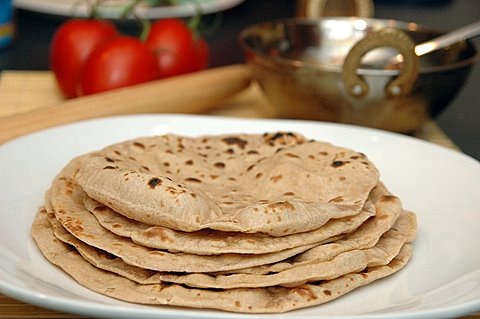
Chapati1

CHAPATIS

Ayurveda does not recommend yeasted breads because yeasted breads can promote ama (toxins) in the body. Yeasted breads can be difficult to digest and can aggravate Vata and cause bloating. The ideal bread is non-yeasted and made freshly at meal-time. Chapatis are enjoyed best piping hot from the stove.

The following recipe makes 12 individual servings

2 cups unbleached white flour

1/2 teaspoon salt

1/2 – 2//3 cup of warm water.

Step 1

Combine flour and salt in a mixing bowl. Gradually add water until dough forms a firm ball.

Step 2

Dust the ball of dough with flour, cover and let set for 30 minutes. (This is an important step in increasing the digestibility of the chapatti)

Step 3

Cut the dough into 12 pieces and roll each piece into a ball. Put the ball onto a floured surface and use a rolling pin to create a 6 inch circle.

Step 4 — for those with gas cooktops

Place the chapati on a heated griddle or frying pan. Cook about 1 minute on each side.

Step 5 — for those with gas cooktops

Put the chapatti directly on the flame of a gas burner and cook until the bread puffs up.

Step 4 and 5 for those with electric cooktops

Take a clean kitchen towel and bunch the corner into a ball.

Place the chapati on a heated griddle or flying pan. Cook the chapatti until you see the surface become slightly darker in color. Flip the chapatti over and look for bubbles to form. Once the bubbles form, flip the chapatti again and quickly begin pressing the chapati with the cloth ball until the dough balloons. Flip once and remove.

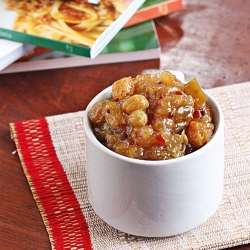
164097

RAISIN-GINGER CHUTNEY (A specialty of The Raj)

This chutney makes a tasty addition to meals and acts to stimulate the digestive fires.

Combine in a food processor:

3 tablespoons lime juice

1/3 cup orange juice

3/4 cup chopped, pealed fresh ginger root

1/2 cup raisins

For information on Ayurveda, Ayurveda consultations or Ayurveda treatments, visit The Raj Ayurveda Health Spa web site:

www.theraj.com

Keep Balanced in Winter with Ayurveda

woman-578429_640

By the beginning of February, those who live in northern climates have reached their peak of Vata aggravation. Months of cold, dry, windy weather results in an increase of those same qualities within our physiology: dryness, coolness, movement and quickness. Once our Vata becomes imbalanced we can start experiencing problems sleeping, aching joints, emotional instability, less mental clarity, dryness of the skin, increased sensitivity to the cold weather and a low frustration level.

With months of cold weather still ahead of us, this is the time to adopt a diet and daily routine that will help settle Vata. One key to balancing Vata is regular routine—eating and going to sleep at the same time, for example. Going to bed early on a regular basis is actually one of the most powerful tools available for balancing Vata.

You may find yourself thinking more about food than you did last summer. When the cold, dry weather of winter begins to aggravate Vata dosha, we naturally crave hotter, more unctuous foods that help counter this effect. An increase in appetite is also the natural result of the cold weather—it tends to cause our digestion fire to increase. As long as you don’t eat more than you can easily digest, large portions at meals can help keep Vata in balance.

One very important point is that the food we eat in the winter should always be warm. Never eat or drink ice-cold food or beverages. Oil is our friend in the winter. Using olive oil and ghee in our meals will help counter the drying effects of Vata.

Along this same line of thinking, daily oil massage with sesame oil is particularly helpful in the winter. The warm, unctuous quality of the oil is the perfect antidote to the cold, dry qualities of Vata. If you are Pitta by nature, you may prefer coconut oil or olive oil, as sesame oil is naturally heating. Ideally you should heat your oil before applying it. Letting your bottle of oil float in hot water for a few minutes will bring the oil to a nice, soothing temperature. Try to keep the oil on for a while before jumping into the shower or bath. 10 minutes letting the oil soak into your skin is ideal.

Vata imbalances often lead to constipation. Remember to drink plenty of warm fluids during the day. Drinking two glasses of warm water when you wake up can help stimulate bowel functioning. Hot water with black salt can also be helpful in this area.

It is easy to find oneself becoming sedentary during the colder months. Be sure that you incorporate Yoga or some kind of gentle stretching exercise into your routine, as well as other comfortable and easy exercise. Don’t strain or over-do in your winter exercise routine. Spring is a much better time for vigorous exercise, as that is the time when Kapha is increasing and we naturally have more strength and stamina.

If you find that diet, lifestyle and self-massage are not helping, it may be that your Vata imbalance has gone deep into the tissues. In this case Panchakarma, the traditional rejuvenation treatments of Ayurveda, are recommended. Panchakarma removes Vata from the tissues by using various herbal decoctions and oil preparations in combination with specialized treatments to treat the root of the Vata imbalance.

For more information on Ayurveda consultations and Panchakarma treatments, visit The Raj Ayurveda Health Spa web site:

www.theraj.com

Ayurveda for Effective Weight Loss

There are many factors involved in becoming overweight and in deciding what is the most effective means of reversing that condition.

Your Appropriate Weight

Ayurveda recognizes that there are different healthy weights and builds for different people. By genetic nature, some people will have heavier builds than others. Heavy-built individuals are still healthy at weights that might be considered unhealthy for individuals with a genetically lighter constitution.

During an Ayurvedic consultation one of the first steps is to use the technique of pulse assessment to determine a person’s “body type”. This understanding of body type is important as too often the ideal body size image portrayed by the media and advertising is not natural or even healthy for a particular individual.

Root Imbalances at the Basis of Overweight Conditions

There can be many factors creating the overweight condition, and it is important to determine which ones are predominant in each individual. For example, people often assume that weight gain is created by an imbalance in Kapha. In fact, many times the underlying imbalance is that of either Vata or Pitta. It is important to identify these underlying factors in order to begin a successful program to create balance.

regime-pour-maigrir

Proper Diet

Dietary knowledge is a foundation of the Ayurveda approach. Knowing your body type and level of balance and imbalance helps provide an understanding of which foods to favor and avoid. In general, “avoid” foods are foods that are hard to digest, clogging to the physiology and heavy in nature. As a general rule, those looking to lose weight should favor foods that are easy to digest, help cleanse the physiology, strengthen digestion and balance metabolism.

Creating Strong Digestion

Our ability to digest food is as important as what we eat. Incompletely digested foods create toxins and impurities that are eventually absorbed, travel throughout the physiology, and localize in the tissues, disrupting their function. This process is at the basis of a wide variety of complications in the overweight condition.

Preventing Toxic Build-Up

It is one thing for extra tissue and structure to accomulate in the body. When the accumulation includes damaging toxins, the serious effects of being overweight begin. According to Ayurveda, almost every major disease condition, from arthritis to allergies to cardiovascular disease, is caused by the buildup of toxins in the tissues and by blockages in circulation.

This is why an Ayurvedic weight loss program will include purification treatments as well as dietary and herbal recommendations and life-style changes.

Panchakarma Detoxification and Rejuvenation Therapy

The most powerful treatments for removing toxins and opening the channels of circulation are the traditional detoxification treatments of Ayurveda, Panchakarma. The daily combination of Ayurveda massage, heat and internal cleansing therapies provide a deeply powerful cleansing for the entire body.

Stress Management

Many individuals experience that improper eating habits and craings are worsened by heightened stress, anxiety and mental fatigue. It is common to find that accumulated stress and mental imbalance drive the eating behavior at the basis of overweight conditions.

Learning the Transcendental Mediation technique provides a simple and effective tool to remove the mental and stress components of the overweight condition

Proper Lifestyle and Daily Routine

One of the most important factors for balancing digestion and keeping our natural cleansing processes strong is to have a lifestyle that does not disturb natural bodily rhythms. When we eat, sleep and exercise in constantly fluctuation patterns, the body loses its natural balancing cycles and can not digest, cleanse or heal itself as effectively. Therefore, regularity in our daily routine can be extremely important in maintaining a healthy, balance physiology.

For more information on consultation, panchakarma treatments or The Raj Weight Loss Program, visit The Raj Ayurveda Health Center:

www.theraj.com