
Optimizing Fertility with Ayurveda

carry-on-stress-free-1It is not uncommon for parents of toddlers to stress over getting their children into top pre-schools so that they will have the best possible start in life. But according to Ayurveda, getting the best start for your child should begin months before the child is even conceived. While it has become more common for mothers-to-be to be alert to their diets and life-style before conceiving, modern science is just now catching up with the ancient wisdom of Ayurveda in encouraging both parents to take early steps in preparation for making a baby.

The big news in 2013 was that what men eat — and specifically if they are eating their vegetables —seriously affects the mobility and health of their sperm and the health of their future children.

In a recent Boston study, male participants who ate the most carrots had the best sperm mobility. High levels of beta-carotene, the pigment that gives carrots, sweet potatoes and pumpkins their bright color, was linked to better swimming ability of sperm.

The same study found that lycopene, a bright red phytochemical found in tomatoes, red bell peppers, watermelon and papayas (but not strawberries and cherries) was linked to more properly shaped sperm. Both mobility and proper shape can affect fertility.

At the same time, a Canadian study on mice revealed that baby mice with fathers deficient in folic acid (a form of vitamin B) were 30 percent more likely to have birth defects.  The lead researcher, Dr Kimmins, of McGill University in Montreal, concluded, ‘Lots of attention has been paid to a mother’s health (during) pre-conception yet the health of the father has been pretty much ignored…. the focus has been on women because they are the incubators of the pregnancy…. But both men and women need to think about what they are doing pre-conception… Men need to eat their greens.”

Where can we find folic acid? Beans, peas and lentils, dark leafy greens, asparagus, broccoli, cauliflower, beets, celery, carrots, squash, okra, brussels sprouts, citrus fruits, avocado, seeds and nuts all are high in this important compound.

The classic texts of Ayurveda offer a great depth of knowledge on how to properly prepare the body before pregnancy. This knowledge forms the basis of the Pre-Conception Program offered at The Raj, Ayurveda Health Spa and Treatment Center in Fairfield, IA.

The program begins at least eight weeks before a couple plans to conceive and starts with a week of detoxification treatments to purify and strengthen their physiologies.  These detox treatments are recommended for two reasons:

1. Accumulated impurities in parents can act as obstacles to proper nourishment. Once these toxins are removed, parents-to-be are more able to respond to dietary changes, resulting in more balanced physiologies.

2. According to the Washington, D.C.-based Environmental Working Group (EWG), most infants come into this world “pre-polluted,” with over 200 toxic industrial chemicals circulating in their bodies.  These findings were consistent no matter where parents lived. We are exposed to chemicals by means of our air, water, soil, and food and household products. And research has shown that the earlier in life toxic exposure occurs, the more powerfully these chemicals affect a child’s development going forward.

While pre-pregnancy detox programs are becoming more and more popular, research shows that only the traditional Ayurvedic purification treatments are able to remove fat-soluble chemicals such as DDT, PCBs and dioxins. These are all hormone-mimicking chemicals known to interfere with fertility.

According to Ayurveda, it takes six weeks for the entire process of digestion and formation of the bodily tissues to take place. Thus for six weeks following the detox treatments, husband and wife follow an individually prescribed organic diet that targets specific imbalances which could be passed on to their children. The diet also provides optimum nourishment to create healthy ovum and sperm.

A healthy child is the result of healthy parents. By strengthening the basic material that makes a child, parents can increase the chance of bringing strong and healthy children into the world.

For more information on optimizing fertility visit The Raj:

http://theraj.com/infertility/index.php


( Picture of pregnant woman. Source: Google Advance Image Search.
Creative Commons. The image is used under the terms of Googles Creative Commons rules:http://creativecommons.org/licenses/by/2.0/deed.en. This photograph and credit do not constitute an endorsement of this blog or products mentioned.)

Healthy Diet, Healthy Brain

Continuing our celebration of fruits and vegetables, it turns out that there is a direct correlation between a healthy diet and a healthy braIn.

Days before  a first-ever G-8 summit on dementia in London, leading English physicians wrote an open letter to the Health Secretary saying that the benefits of diet far outweighed “dubious drugs” in the battle against dementia.  They urged that the best strategy for preventing Alzheimer’s and other memory-affecting diseases was a diet of fresh fruits and vegetables, nuts, fish and olive oil.

The link between diet and healthy brains is not new. Back in 1991 a study at California’s Loma Linda University suggested that meat eaters had double the risk of developing dementia as vegetarians. (No difference was observed between lacto-ovo-vegetarians and vegans.)

Good Diet Key to Regaining Memory

In 2011, researchers from VA’s Puget Sound Geriatric Research, Education and Clinical Center documented an important link between diet, exercise, and the development of Alzheimers.

According to lead author Laura D. Baker, PhD, for those who are aging normally, regular exercise can help offset the “potential pathological effects of a western-type diet on Alzheimer’s disease biomarkers in the brain”.  But for adults who have already have an existing condition of mild cognitive impairment, improvement only came when a change in diet was added to the regular exercise routine. Switching to diet low in saturated fats and refined carbohydrates actually improved memory function.

Results in Only 4 Weeks!

The team found that a diet low in saturated fat and high in foods such as whole grains and vegetables could favorably alter the levels of certain markers for Alzheimer’s in only four weeks. This diet improved visual memory not just for older adults with mild levels of Alzheimer’s disease but for healthy older people too.

While these studies have been small in scope, they all lead to the encouraging conclusion that we do not have to wait for a magic drug to appear on the market to protect us from dementia. Instead there are simple life-style changes that we can make today to keep our brains alert and functioning in good order. By favoring regular exercise and a diet of lean proteins, fruits, vegetables and whole grains, and by keeping sugar and refined carbohydrates to a minimum, we can reduce the risk of dementia and at the same time significantly increase our level of physical health and well being. Win/win!

To take a free dosha quiz and find out more about what fruits and vegetables create balance for your physiology, visit The Raj website:

http://www.theraj.com

Fruits and Vegetables Make You More Attractive

Fruits&VeggiesThe past year was a banner year for fruits and vegetables. With research linking them to lowered cholesterol, improved sperm quality, increased fertility, protection from UV rays, and the prevention of anemia, dementia and cancer, fruits and vegetables are emerging as superfoods in the quest for health and longevity. There is even evidence that eating fruits and vegetables makes you more attractive.

I wanted to start reviewing some the latest research on fruits and vegetables one claim at a time.  And since nothing motivates like vanity, I’ll start with two studies that reached similar conclusions: the more fruits and vegetables you eat, the more attractive you are to others.

Researchers in one study followed the diets of 35 participants, took pictures of them at the end of the program, and showed the pictures to others. Those participants who ate an average of 2.9 more portions of fruits and vegetables each day developed a golden tint to the skin and were rated as healthier looking. And those who downed an extra 3.3 portions daily were rated as more attractive.

A similar study published in the Royal Society journal in England found that photographs of subjects whose skin color was altered through a diet rich in fruits and vegetables were rated as more attractive than those with suntans.

What is the science behind the results? Antioxidants in fruits and vegetables improve circulation and alter skin pigment. Lycopene, a bright red carotene that gives a red color to tomatoes, watermelon and other red fruits and vegetables, and beta-carotene, found in sweet potatoes, carrots, cantaloupe broccoli, kale and other leafy greens, seemed to have the greatest role in altering skin color.

Polyphenols, which increase blood flow and oxygen delivery to the skin surface, also played an important role. Polyphenols are found in fruits such as berries, grapes, apples, plums and lychees, and in vegetables such as artichokes, Brussels sprouts, and parsley.

In addition to altering the tone of the skin, antioxidants also enhance skin quality by fighting the damaging effects of pollution, stress and UV rays.

Dr Ian Stephen, from the School of Psychology, University of Nottingham, Malaysia Campus, led the research connecting vegetable-enhanced skin tones and increased attraciveness and concluded, “Most people think the best way to improve skin color is to get a suntan, but our research shows that eating lots of fruit and vegetables is actually more effective.”

He went on to surmise that evolution probably favored those who choose to form alliances or mate with healthier individuals over unhealthy individuals. Thus, he concluded, we are programmed to respond to a healthy glow.

Next time I’ll look at a more serious benefit of eating fruits and vegetables: their importance in preventing dementia.

To help determine which fruits and vegetables best support your body type, take a free dosha quiz at

www.theraj.com

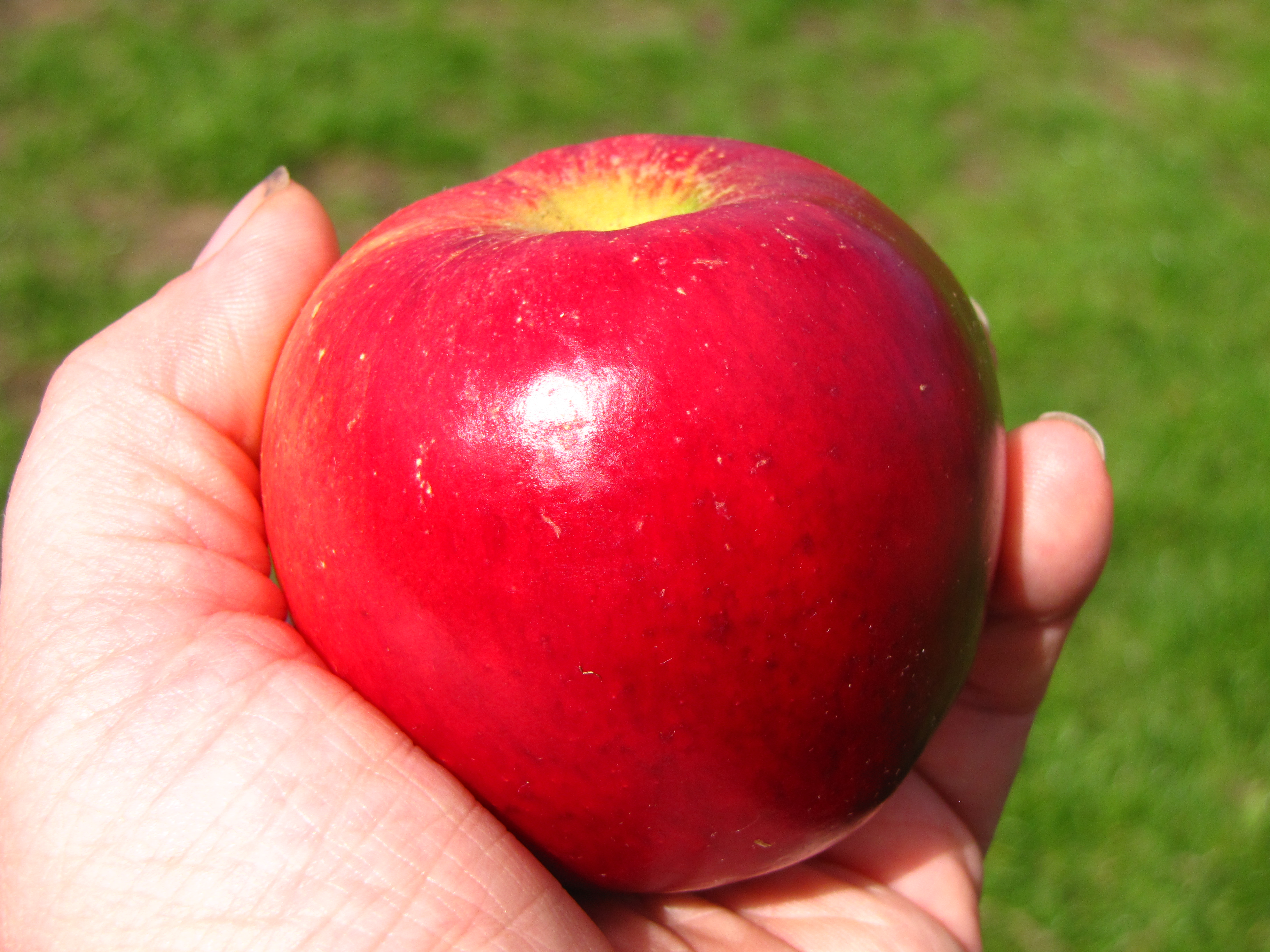
(Photo of Shiny Red Apple by London Looks, Flickr Creative Commons. The image is used under the terms of Flickr’s Creative Commons rules:http://creativecommons.org/licenses/by/2.0/deed.en. This photograph and credit do not constitute an endorsement of this blog or products mentioned.)

Your Sugar or Your Health?

The New Year is approaching and it’s time for that commitment to better life choices: the New Year’s Resolution.  I like the “fresh start” approach to a new year. A while ago I discovered a great recipe for success. I start the year with a week of Ayurveda detoxification treatments, known as Panchakarma, and pick one New Year’s resolution. The treatments remove imbalances that trigger food cravings and the resolution resets my thinking in one manageable area. It is a winning combination. This year my resolution is to cut down on my sugar intake.

Recently a London cardiologist was in the news saying sugar is so addictive it should be considered a danger to society and should be regulated like alcohol.  The biggest surprise in reading the story was the long list of health woes connected with eating too much sugar. I expected to hear about obesity and diabetes. But reading about the link to heart disease, dementia, liver damage and cancer was a shocker. It turns out that a sugary diet messes with a number of important hormone levels, chemicals and processes in the body.  Today I’m just going to look at two studies that inspired my resolution.

Sugar makes you depressed and lethargic

Most of us know that a high sugar intake signals the pancreas to produce large amounts of the hormone insulin, often causing a huge drop in energy after the initial “sugar high”.

But did you know that sugar blocks the action of orexins — neurotransmitters that regulate appetite, energy expenditure and wakefulness? (The most common form of narcolepsy is caused by a lack of orexin in the brain.)  High levels of orexin have been linked with happiness while low levels are linked to sadness and depression. The suppression of orexin cells has been associated with obesity because that chemical has the responsibility of telling the “good fat” in our bodies to burn calories. Blocking orexins can lead to dullness, depression, lethargy and obesity.

(The good news is that amino acids, or protein, “excite” orexin cells.  So by all means reach for almonds instead of a candy bar if you need a late afternoon energy boost.)

Sugar can addle your brain

Eating too much sugar can affect the brain in other ways.  A study released in 2013 looked at 248 brain scans of people aged 60 to 64 over a period of 4 years. All participants had blood sugar levels in the normal range at the start of the program. At the end of the four years it was discovered that those with the highest blood sugar levels had higher levels of shrinkage in the areas of the brain associated with memory and cognitive function. It is already established that type-2 diabetes is linked with dementia.

As I said, there is additional research linking sugar to heart disease, liver damage and cancer, but the information about sugar’s influence on the brain was enough to inspire my New Year’s resolution.

Alternative choices

Does this mean no sugar at all?  According to Ayurveda, sugar helps to balance Vata and Pitta. So my question is, how much sugar is okay and how much is too much?

The American Heart Association recommends no more than 6 teaspoons a day for women and 9 a day for men. 1 teaspoon of sugar is 4 grams. There are about 10 teaspoons of sugar in a can of Coke Classic. There are about 5 teaspoons of sugar in a single serving of Cherry Garcia ice cream and almost 7 teaspoons of sugar in a single serving of Haagen-Das raspberry sorbet. If a pie requires 1 cup of sugar, divided by eight that means about 12 teaspoons per slice.  In other words, 6 teaspoons doesn’t get you very far if you are in the habit of snacking on sugary foods.

Thankfully there are a few options for those of us with a sweet tooth. Stevia has zero calories and won’t cause a jump in your blood sugar. I have friends who are great fans of Xylitol, which is a naturally occurring sugar alcohol found in beets, corn and berries. Because it is only partially absorbed by the body, it has a lower glycemic index and only around 9 calories per teaspoon. Honey has a lower glycemic index than white or brown sugar. However, honey should never be used in baking as it ferments when heated and creates a sticky toxin that blocks the body’s channels.

Ultimately the best course of action is simply to get out of the habit of needing sweets. Ayurveda recommends hot milk to counter the urge for sweets. Milk is considered a “sweet taste” but also provides amino acids (exciting the orexin cells!) and classical texts say milk has the ability to nourish all the tissues in the body within 24 hours. Of course always boil your milk first to make it easier to digest.

Later on I will share additional research detailing more ways that an overload of sugar can take a toll on our health. There is certainly a growing pile of evidence out there! In the meantime I look forward to enjoying increasing energy and alertness as I transition into a healthier new year.

Visit The Raj to learn more about Ayurveda

www.theraj.com


The Health and Happiness Connection

Can having loving thoughts, being kind or just feeling happy make your body healthier? Both the ancient texts of Ayurveda and modern research say yes!

The original texts of Ayurveda, dated over 5000 years ago, recognized the importance of behavior for mental and physical well being with a branch called Achar Rasayana. Achar refers to behavior and Rasayana means that which promotes life.

Behavioral Rasayana is based on the principal that just as your words and actions produce an effect in your environment, so they also have a direct effect on your mind, body, intellect and emotions. This is because your entire mind-body system, your behavior and your environment are integrated and function together as one whole.

Modern researchers have found that negative emotions such as fear and anger can create such stressful reactions that they break down the body’s immune system and eventually make it sick. Research from the Department of Health and Social Behavior, Harvard School of Public Health in 2000 concluded, “growing evidence indicates that negative emotions may influence the development of coronary heart disease.”

On the other hand, positive thoughts and actions produce positive health results. A number of studies show that happy, well-adjusted people have fewer severe illnesses and live longer.

Science now knows that every time you have a thought or a feeling, every cell in your body creates chemicals called neuropeptides, which directly affect all your physical systems and organs.

Charika Samhita, the primary text of Ayurveda, specifies certain behavioral rasayanas that help one to progress and create better health and an ideal quality of life.

Here is a list of some traditional Behavioral Rasayanas from the Charika Samhita

Speak truthfully, but sweetly

Speak well of others

Enjoy the good qualities of others

Maintain untainted belief in friends

Be loving and compassionate

Do good and be silent. Accept good and sing the givers praise

Abstain from immoderate behavior and alcohol

Be calm and nonviolent

Keep yourself, your clothing and your environment clean and orderly

Be charitable to others: pass on food, money, and knowledge

Be respectful to elders and teachers

Be loving and compassionate

Keep a regular routine

Keep the company of the wise

Worship God according to your religion

Practice the Transcendental Meditation program on a regular basis

Be devoted to knowledge and the development of consciousness

Learn more by visiting

www.theraj.com

An Apple a Day….Seven Dietary Recommendations to Reduce the Risk of Cancer

AppleIt is estimated that 60-70% of cancers can be prevented by the implementation of simple changes in one’s diet and lifestyle. Below are a few recommendations that have been shown to help prevent cancer and also promote overall health and wellbeing.

1. Increase amounts of fruits and vegetables (organic when possible.) Most of the fruits and vegetables you buy at the grocery store are laced with hazardous chemicals. However, fruits and vegetables also contain bioflvinoids, which are known to have anti-oxidant and anti-cancer properties. Because plants create oxygen as a by-product of harnessing the suns’ energy through photosynthesis, they have to develop powerful anti-oxidant defenses to combat the lethal combination of sunlight and oxygen (a recipe for free radicals.) The anti-oxidant substances used by plants to control free radicals work exactly equally in the human body.

2. Enjoy vegetable fats (such as those found in nuts and olive oil) and reduce intake of saturated and trans fats often found in meat and processed foods. Head researchers on a new study on prostate cancer published in JAMA, June 2013, concluded,” If you eat the right kind of fat, you are less likely to die of not only prostate cancer, but really, of any cause.”

3. Avoid excess weight gain. Those who are 40% overweight have a much higher risk of developing cancer.

4. Increase fiber intake. A high fiber diet helps remove toxins from the body. Low fiber and high animal fat diets have been implicated in cancer of the colon. This is another reason to increase the amount of fresh vegetables and fruit in our diet.

5. Favor fresh foods. Avoid processed foods and artificial sweeteners.

6 Add turmeric to your diet. Turmeric has been shown to protect the DNA of the cells and to stimulate detoxifying enzymes. Turmeric also has anti-inflammatory properties and increases the anti-cancer properties of other phyto-chemicals (plant chemicals). This is just a sampling of the many beneficial properties of this wonderful spice.

7. Avoid eating meat (this includes lean meats and chicken.) Every cell in a piece of meat and chicken contains a membrane that controls what goes in and out of the cell. This membrane is made up mostly of polyunsaturated fatty acids. Not only are polyunsaturated fats easily oxidized (creating free radicals), they are also storehouses for fat-soluble carcinogens and chemicals, such as many pesticides and herbicides. When you eat meat, ingesting these chemical-concentrated fats, the chemicals then become stored in your body fat, attaching to the DNA structure.

If you read my blog on a regular basis, you have already heard about the research that Robert Herron, Ph.D. conducted on the Ayurveda purification therapies (panchakarma) offered at Raj, Maharishi Ayurveda Health Center in Fairfield, IA.

The study, published in Alternative Therapies in Health and Medicine in 2002, showed that levels of fat-soluble toxins could be reduced by about 50% through a 5-day treatment program. The reason I keep bringing up this study is that there exists no other proven method of removing these kinds of fat-soluble chemicals from the body.  Western medicine offers no solution beyond letting nature take its course.  These toxins are know to have a half-life of anywhere from 7 to 30 years. This means it takes 7 to 30 years for the quantity to fall to half its value — to achieve a 50% reduction. The results of this study came after only five days of treatment.

There are a wide variety of detox programs available today that can remove water-soluble toxins and even heavy metals. Panchakarma, however, is the only proven means of removing fat-soluble toxins.

Whatever foods you may have eaten in the past, it is reassuring to know that you can undo many of the negative effects of those foods and start fresh on a new path of good health.

To learn more about Panchakarma visit

www.theraj.com


(Photo of Fruits and Vegetables Basket. Source: National Cancer Insitute, an agency part of the National Institutes of Health via Wikimedia Commons. The image is used under the terms of Wikimedia Commons rules: http://commons.wikimedia.org/wiki/Commons:Licensing. This photograph and credit do not constitute an endorsement of this blog or products mentioned.)

Early to Bed… Makes One Healthy!

If you struggle to fall asleep at night, you are not alone. As many as 60 million Americans suffer from insomnia — and that number is growing every year.

According to Ayurveda, insomnia is most commonly caused by a disturbance in vata dosha. Vata dosha is the principle concerned with movement in the body. When vata is out of balance, your mind can be racing and your body can be so keyed up at bedtime that you are not able to fall asleep.

People with vata disorders tend to keep irregular habits, including eating at different times of the day and going to bed at all hours — habits that can cause vata dosha to become even more imbalanced.

Being out of tune with nature’s daily rhythms may actually be causing insomnia in millions around the world. With the invention of the electric light bulb, it suddenly became possible for many activities to take place after sunset. To re-attune yourself with nature’s rhythms, try going to bed at the same time every night, preferably with a bedtime of 10:00 or earlier.

According to Maharishi Ayurveda, the many rhythms and cycles of the cosmos (such as the circadian rhythm, caused by the earth rotating on its axis every 24 hours, or the seasonal cycle of the earth revolving around the sun) have a counterpart in the human body.

Modern science is beginning to study this phenomenon. Research shows that many neurological and endocrine functions follow the 24-hour cycle. Our sleep-wakefulness cycle is one of those circadian rhythms. Science now knows that many of the hormones your body needs to repair itself are released while you sleep. Science tells us that between 10 p.m. – 2 a.m. the deepest and most regenerative sleep occurs. Remember that time: you’ll hear about it later.

Ayurveda has identified three “master cycles” that occur in your mind/body system — and in nature around us. You experience them in terms of the three doshas: vata, pitta, and kapha.

Kapha cycle in the evening takes place from 6:00 p.m. to 10:00 p.m., after work is finished and the sun is setting. You naturally feel more relaxed and drowsy at this time, since your body is preparing to sleep. This is the influence of kapha dosha, which by nature is slow and heavy.

If you go to bed during this kapha cycle, before 10:00 p.m., sleep will come more easily and will have more of the slow, stable quality of kapha dosha.

Modern research concurs that sleep gets lighter and lighter as dawn approaches. The deepest NREM slumber occurs within 20 minutes of falling asleep and gets interrupted around 90 minutes later by a five-to-ten minute round of REM-type sleep. For the rest of the night, you alternate between the two types of sleep in 90-minute cycles, with your NREM sleep getting shorter and less deep and the lighter REM cycles getting longer.

Because so many people suffer from an aggravation of vata, it becomes difficult to stop activity and head to bed early. If you go to bed after 10:00 p.m., you are going to bed during the pitta cycle, which is between 10:00 p.m. and 2:00 a.m.  Pitta is the principle that governs transformations. At noon, when we are also in a pitta cycle, that principle of transformation helps us to digest our lunch (which Ayurveda recommends should be our biggest meal of the day). In the evening the transformative properties of pitta should be used to help repair the body while we sleep, refreshing and renewing our physiology for the next day. However, if we are awake during this time, many experience a spurt of intellectual activity and find that this is the “perfect” time to catch up on work or personal projects. Once the mind becomes active during the pitta cycle, it is difficult to turn off thoughts. Combined with a vata imbalance, which can “fan the fires” of pitta, you could easily find yourself up until the wee hours of the morning.

While there are many other aspects of insomnia to consider, the first step that anyone who is serious about conquering insomnia should take is to create a regular schedule which includes being in bed before 10:00 at night.

A visit to an Ayurvedic expert will help you to more precisely pinpoint which imbalances are keeping you from a good night’s sleep.  They can prescribe diet, supplements and lifestyle changes that will support your efforts.

Learn more about Ayurveda at

http://theraj.com/ayurveda/ayurvedic-treatment.php

Eliminating Toxins Can Lead to Weight Loss

Environmental toxins are now being recognized as major contributors to obesity and recent research suggests that the removal of these toxins from our bodily tissues may be an effective treatment approach for treatment-resistant or chronic weight gain. Ayurveda offers a time-tested approach to removing toxins that is comfortable, safe, and, in fact, more effective than any other form of purification approach available today.

Many of the toxic chemicals that build up in our system over time (scientists estimate we have over 700 environmental chemicals in our bodies) are fat-soluble: this means they adhere to our fat tissues — and can stay there for up to 30 years. When we lose body fat, these chemicals get released from shrinking fat cells only to be reabsorbed by other fat cells.

A published research study (Sept./Oct. 2002 issue of Alternative Therapies in Health and Medicine) on the Ayurvedic panchakarma (purification) treatments offered at The Raj Ayurveda Health Center in Fairfield, IA showed that  50% of these dangerous toxins were actually removed from the body with a 5-day treatment program.  No other method of detoxification has been shown to dissolve this class of fat-soluble toxins from our cell walls and then eliminate them from the body.

Not all toxins come from our environment. It turns out that we create some toxins ourselves due to poor digestion or poor food choices. Ayurveda refers to the toxins created by poor digestion as ama, a sticky residue that gradually clogs up the cells and channels of the body. This waste material can impair cellular functions and accelerate aging. It can also cause lethargy, fatigue, dullness, erratic eating habits and compulsive eating.

When ama blocks the channels of the body, Vata, the principle of movement throughout our physiology, no longer flows property and can become trapped in the abdomen. This can stimulate an abnormal digestive “fire”. As a result, a person feels hungry and begins to eat excessively, beyond their actual need.

The specialized Ayurveda detox treatments (Panchakarma) are also helpful for this type of toxin. Panchakarma reduces imbalance Vata as the same time that it helps “chisel away” impurities and toxins that have been slowly building up in the body over years. Removing these blockages and toxins allows the natural intelligence of the body to become more expressed. Cravings disappear and more natural eating habits are more easily established.

For more information on Ayurveda weight-loss programs, please visit The Raj Ayurveda Health Spa website:

www.theraj.com

Ayurveda Tips for Youthful Skin

The first step in maintaining healthy, youthful skin is to identify your Ayurvedic skin type.

Vata skin can be dry, rough and flaky when out of balance. This type of skin wrinkles more easily as it tends to be thin with fine pores.

To pamper Vata skin, bathe in water at body temperature. Go to bed before 10:00, as fatigue aggravates Vata.

Pitta skin tends to be rosy, sensitive, and of a medium thickness. This type of skin burns easily. When out of balance, Pitta skin can develop rashes, acne, or rosacea.

To pamper Pitta skin, bathe with water a little cooler than body temperature. Avoid spending time in the sun, especially from noon to 2 p.m. Pitta types are more prone to skin cancer than other skin types. Avoid spicy food.

Kapha skin tends to be lustrous, cold and thick, with a tendency towards large pores. When out of balance, Kapha skin can become oily.

To pamper Kapha skin, bathe in water a little warmer than body temperature. A once-a-week massage with raw-silk gloves can enliven the circulation and help reduce excess Kapha.

For most skin types, sweet almond oil is a good lubricant to use after washing. Avoid soaps with chemical additives. Always be gentle when washing the faces, as it is easy to aggravate Vata, which makes the skin dry and promotes wrinkles.

The Raj Ayurveda Health Spa in Fairfield, IA offers facials that are individually tailored to help balance your skin needs. Developed by the greatest skin experts in India, this gentle approach, once used by the maharanis of ancient India, helps both balance the doshas and eliminate impurities.

http://www.theraj.com

Walking For Your Ayurvedic Body Type

According to Ayurveda, walking is a healthy exercise for all body types.  In recent years researchers have found the old-fashioned stroll produces amazing results. It can lower your bad cholesterol, increase cardiovascular fitness and stop bone loss.

For maximum benefits, gear your walking to your body’s individual needs. Ideally one should stay within your body’s range of comfort. Listen to what your body tells you. If you feel any strain or discomfort, ease up and get back into your comfort zone.

Most experts today recommend 30 minutes of moderate-level physical activity  5 – 6  days of the week to see health benefits. Brisk walking is considered a type of moderate-level physical activity.

Ayurveda identifies ten body types, made up of different combinations of the three doshas, vata, pitta and kapha.

If you are a mentally active, vata type, be careful not to over-extend yourself.  A 15 – 20 minute walk is ideal. If you are trying to fit in 30 minutes of exercise a day, break it into two sessions so as not to aggravate your vata.

If you are a pitta type you will probably feel bored unless you can look at beautiful scenery along the way — or unless you feel a bit of a challenge. Pitta types need longer, more vigorous stretches of exercise. Try walking for 30 to 45 minutes at a fast pace, even doing race -walking if it is comfortable. But avoid exercising during the hotter hours of the day.

Kapha types need to find hilly terrain or try fast-paced aerobic walking for 45 – 60 minutes.

Both kapha and pitta types can increase aerobic activity by swinging their arms as they walk. But beware of carrying weights, as that can cause ligament damage. If you want to build up your arm muscles, check into weight training.

No matter what your body type, you can gain much more from your walk if you stretch before and after you walk. Yoga exercise or 5 minutes of Surya Namaskara can be beneficial for neuromuscular integration. The more prepared your body is, the more effective your walk will be. It helps to warm up your muscles before making demands on them and the cool-down increases flexibility.

Benefits of Walking

Regular moderate physical exercise has been shown to lower the risk of developing dementia.

Walking has been shown to reduce risks of heart disease and stroke, high blood pressure, colon cancer and diabetes.

Walking is a weight-bearing exercise that helps to strengthen muscles and bones, thus decreasing your risk of developing osteoporosis and arthritis.

Walking may help protect against certain types of cancer, such as breast cancer.

Walking increases the number of calories your body uses, which helps to benefit weight loss .

Walking for 30 minutes three to five times per week for 12 weeks reduced symptoms of depression by 47% (as measured with a standard depression questionnaire).

Walking just three times a week for 30 minutes has been shown to significantly increase cardio-respiratory fitness.

A visit to an Ayurvedic expert experienced in the technique of Ayurvedic Pulse Assessment can help you to more precisely pinpoint your body type and current mind/body balance.

www.theraj.com